Advancing the protection and respect of the rights of LGBTI+ persons in business activities: The role of trade unions
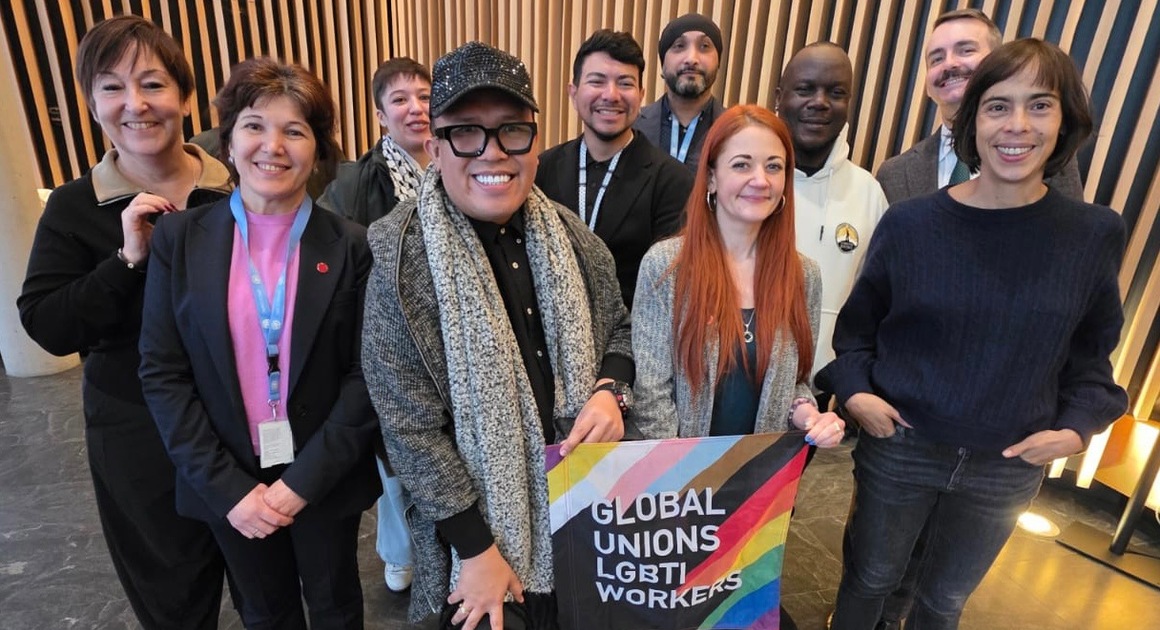
During the 14th Session of the United Nations Business and Human Rights Forum, ILGA World and the CGU LGBTI Committee collaborated for the first time on an afternoon side event on 26 November, Advancing the Protection and Respect of the Rights of LGBTI+ Persons in Business Activities: The Role of Trade Unions. The event aimed to encourage businesses not to roll back on Diversity, Equity and Inclusion (DEI) initiatives offering ways in which trade unions could support them. Funding for this event was provided by The Trade Union Solidarity Centre of Finland (SASK). This project was the first of its kind, and an opportunity to both network and work together with businesses moving forward.
The event was organised by the Council of Global Unions LGBTI Coordinating Committee and Guillermo Ricalde, Senior Programme Officer on UN Special Procedures at ILGA World. Speakers included Jeffrey Boyd, National Executive Director of the American Guild of Musical Artists (AGMA) and Co-chair of the CGU LGBTI Coordinating Committee, Toni-Gee Fernandez, Executive Director of Mujer LGBT in the Philippines, Ishmael Bahati, Executive Director of Pema in Kenya and Manisha Dhakal, Executive Director of Blue Diamond Society (BDS) in Nepal. The event was moderated by Gurchaten (Nanoo) Sandhu, Director of Programmes at ILGA World, with opening and closing remarks from Sue Longley, Former General Secretary of the IUF.
Sue Longley described how IUF have engaged more people in the organisation using a strategy which has involved targeting with local framework agreements, and commitment to sit down and discuss workplace issues including freedom of association and occupational safety and health but also DEI programmes. Making the link between the Sexual Harassment endemic, the IUF have successfully engaged with companies to improve prevention of sexual harassment and ensure policies are in place to protect LGBTI workers. Sue elaborates that collectively we need to look at how things have changed recently regarding the pushback on rights, with focus on DEI inclusion and commitments, focusing on how we can help companies establish common ground to achieve this.
Jeffrey highlighted the issue of global authoritarian movements leading a campaign against the LGBTI community, which is focused on trans people specifically. The Lesbian and Gay community have historically made great strides in regard to legal rights, but it is a different situation for the trans community with the rollback of legal rights for trans people, especially in the US with 100 out of 500 anti LGBTI bills already passed. The CGU LGBTI committee have organised three significant trainings over the past two years on C190 eliminating violence and harassment focussed on LGBTI workers in South Africa, Colombia and the Philippines. The committee are proud of this work and the ability to grow capacity, especially at a time when there is so much pushback on DEI initiatives worldwide.
Manisha explained that the constitution from 2020 includes LGBTI rights; every citizen of Nepal has access to gender identity rights. No one should be denied less than equal protection. The 2015 civil service application now includes multiple genders. LGBTI workers are often “invisible” in the labour union. Many times, work on LGBTI rights is limited to HIV and legal recognition and stakeholders often don’t engage in other issues. Knowledge gaps in political parties and institutions mean that often the terminology of the LGBTI spectrum or the issues faced by the community are not understood.
Toni Gee described the current situation in the Philippines for discrimination of LGBTI people. For trans people especially, what role can trade unions play in promoting formality?
The Philippines is regarded as tolerant overall, but it is not always the case in the workplace. Documentation becomes a barrier as there is no legal recognition of gender identity so people must continually explain why their gender expression doesn’t match their documents. In workplace environments there are reports of discrimination and misgendering. When people can't access the formal economy, they access informal economy work.
A national framework and access to government services is needed as lack of legal gender recognition is one of the biggest struggles. Progress needs to spread to more sectors such as manufacturing, with a need for stronger discrimination clauses and reporting systems. Public support for gender recognition can help shape perceptions, and economic empowerment is crucial in our fight.
Ishmael highlights that the Kenyan trade union movement does not have laws specifically protecting the rights of LGBTI Workers in the workplace, unlike the ministry of health which has some policies to protect access to health for LGBTI workers. However, the trade union movement itself has been quiet on intentional inclusivity of LGBTI workers. Some organisations are working with the trade unions to promote inclusion of LGBTI rights through advocacy, training and lobbying. The Kenyan supreme court ruled that the LGBTI community have freedom of association. This has set a pace for employers to be cognitive of protection of LGBTI workers. There has been an attitude shift, change in dialogue and intervention led by LGBTI organisations and their allies. Kenya voted in favour of the renewal of the mandate of the special rapporteur for SOGIESC at the UN, setting precedent that there is need to protect the rights of the LGBTI community. The LGBTI community are often the background innovators and contributors if they happen to get job opportunities because companies are afraid to be associated or known to be working with them. In some cases, this is because of the risk they face with Anti LGBTI groups who often attack businesses owned by or perceived to be working with LGBTI people. Efforts and contributions by LGBTI workers are often credited to others, as the LGBTI workers are only shadow employees. He says, “They would see homosexuality and not see Ishmael.”
Nanoo concluded that trade unions need to do more for both protections and changing public perceptions, employers are afraid to speak out on this, so we need more protections for them too. During the first ILGA conference in 2016, everyone came together to plan first Trade Union pre-conference. By 2022, 170+ workers were in the room.
Sue added that trade unions should be allied with the broader communities but must also look from within the movement to encourage people to come forward.
The two LGBTI fringe events at the UN Business and Human Rights forum are the first of their kind. Earlier in the day, ILGA World hosted a side event with Open for Business, Advancing Economic Empowerment: Civil Society and Business Strategies to Foster LGBTI people’s rights.
The ILGA article on both events can be found here .